Learn everything about creating and editing checklists and optimize your process even further!
- What are Checklists?
- How to create a checklist?
- Setting up a checklist from scratch: Registration Data tab
- Setting up a checklist from scratch: Structure tab
- Setting up a checklist from scratch: Users tab
- Is it possible to import checklists?
- Is it possible to edit any information in a checklist?
- Is it possible to delete a checklist?
What are Checklists?
Checklist is the term used for a set of items or questions that need to be answered or evaluated during an audit or inspection, whether internal or external.
In this sense, the answers obtained through the application of a checklist can function as indicators for insights of the unit in which you are evaluating.
✅ Do you know what are units? Check this article to kow more about them: ➡️Here⬅️
How to create a checklist?
Follow the steps below and see how simple and intuitive it is to create a checklist:
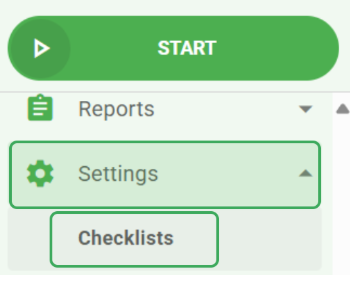
Step 1: In the system's left side menu, click on Settings and then on Checklists.
Step 2: There are 4 ways you can create a checklist, the options being: (1) New, (2) Create checklist with AI, (3) Create checklist from scratch or (4) Create checklist from a template.
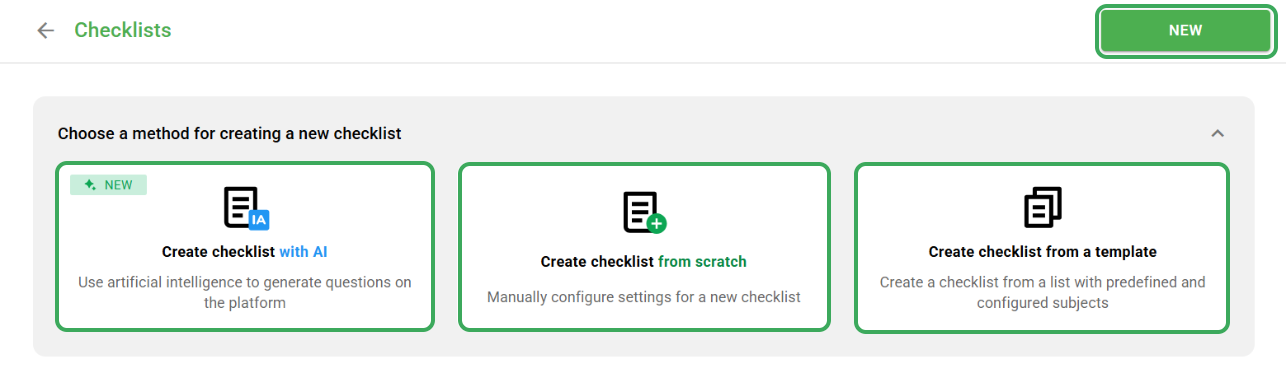
See what each of these options means:
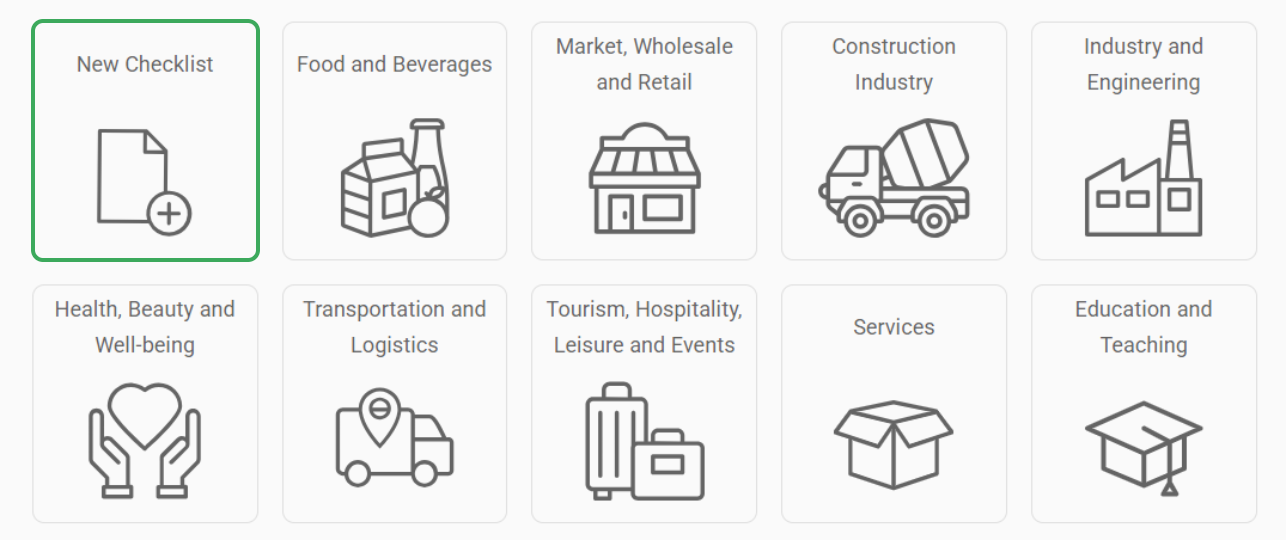
- (1) New: Clicking this button will open a page with several options, including New Checklist. Here you can create your assessment with the items and steps you need.
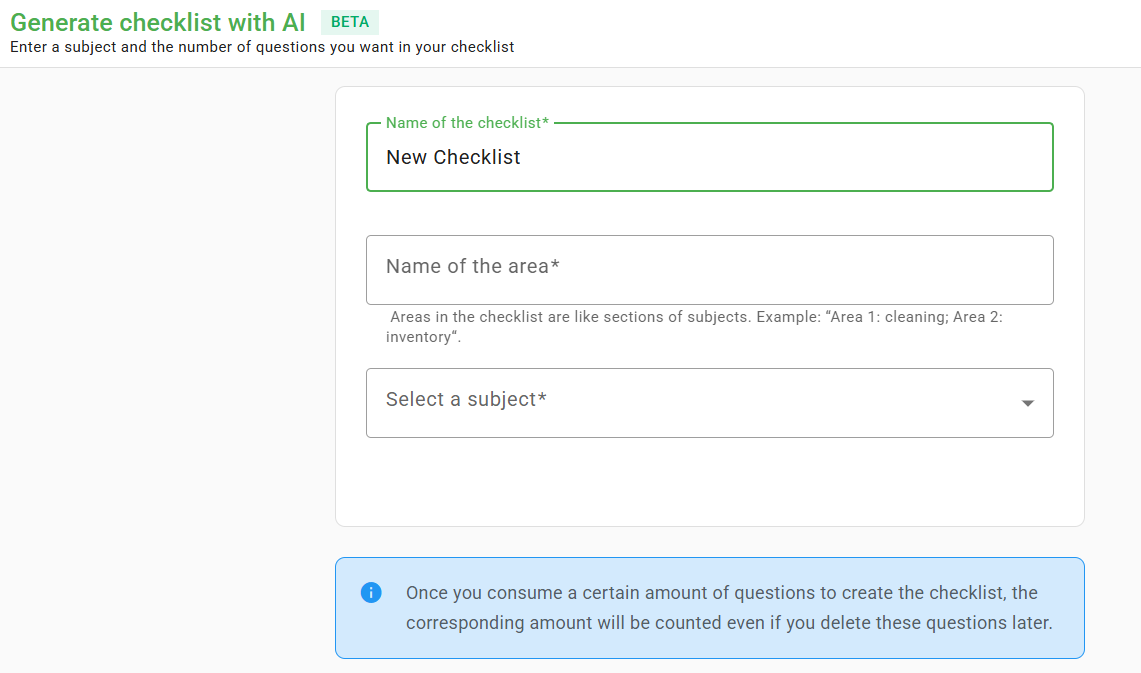
- (2) Create checklist with AI: this option allows you to use artificial intelligence (AI) to generate questions for your checklist, optimizing time. Just give it a name, type the name of the area, select a subject of interest, the number of questions you want (maximum 250) and that's it: your checklist will be generated automatically!
- (3) Create checklist from scratch: this option is very similar to the first one (New button) and has the same purpose.
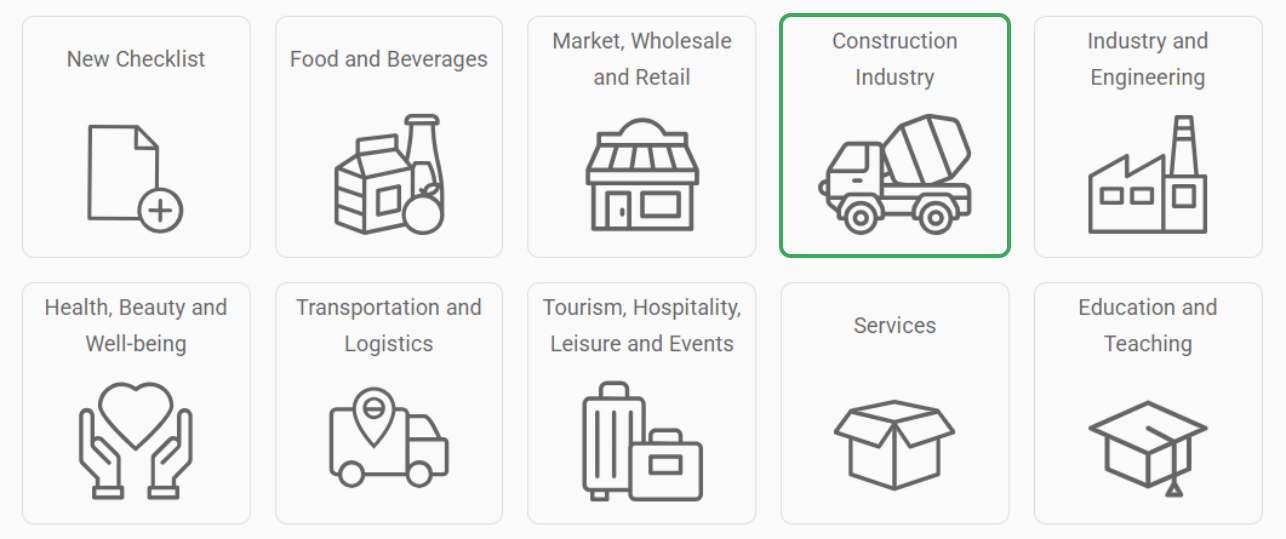
- (4) Create checklist from template: This option allows you to reuse existing checklist templates, as in the Construction Industry example:
Setting up a checklist from scratch: Registration Data tab
If you choose to create a checklist from scratch, the first step is to fill in the Registration Data, available on the first tab of the checklists screen.
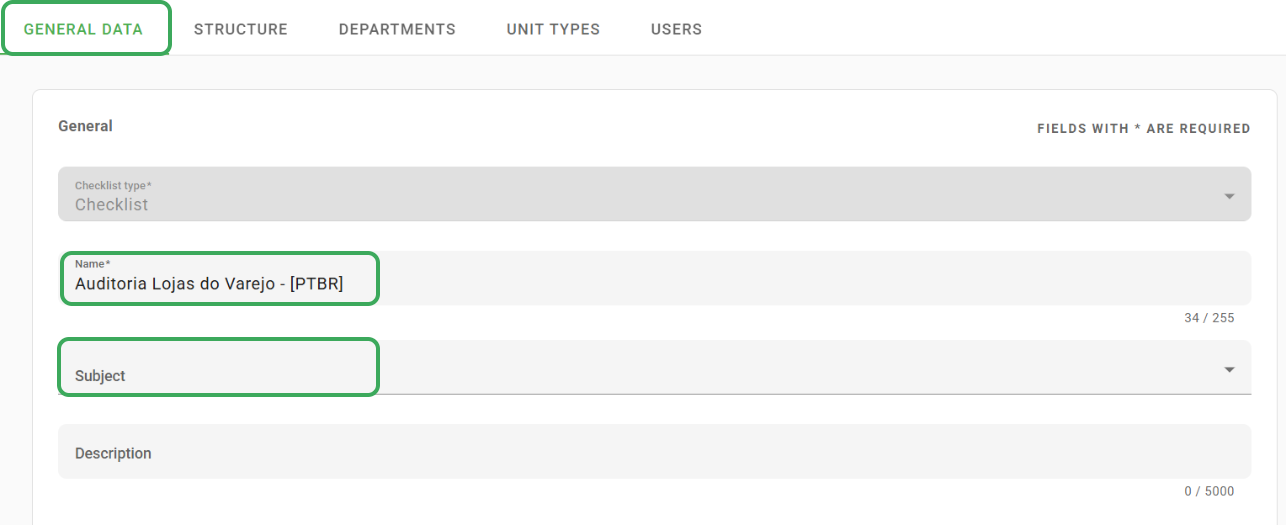
Here you will name your checklist, select a Subject from the drop-down list or click on "Other Subject" and enter a theme corresponding to the checklist being created. These two fields are mandatory and help to facilitate the identification of these checklists later, as is the case with the subject field, which can be used as a filter when searching for a specific application.
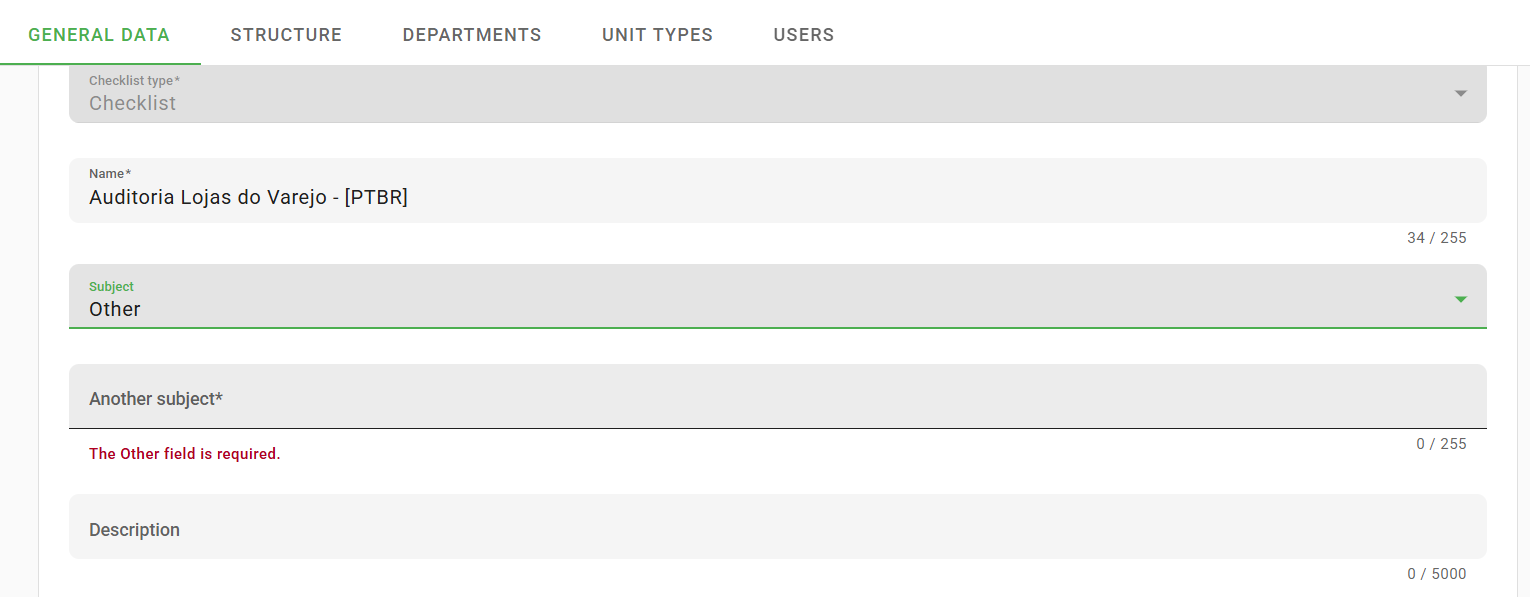
Finish by adding a description of the checklist, to support the applicators at the time of application, if necessary.
After completing your registration, leave this checklist active and click Save at the bottom of the page. That's it!
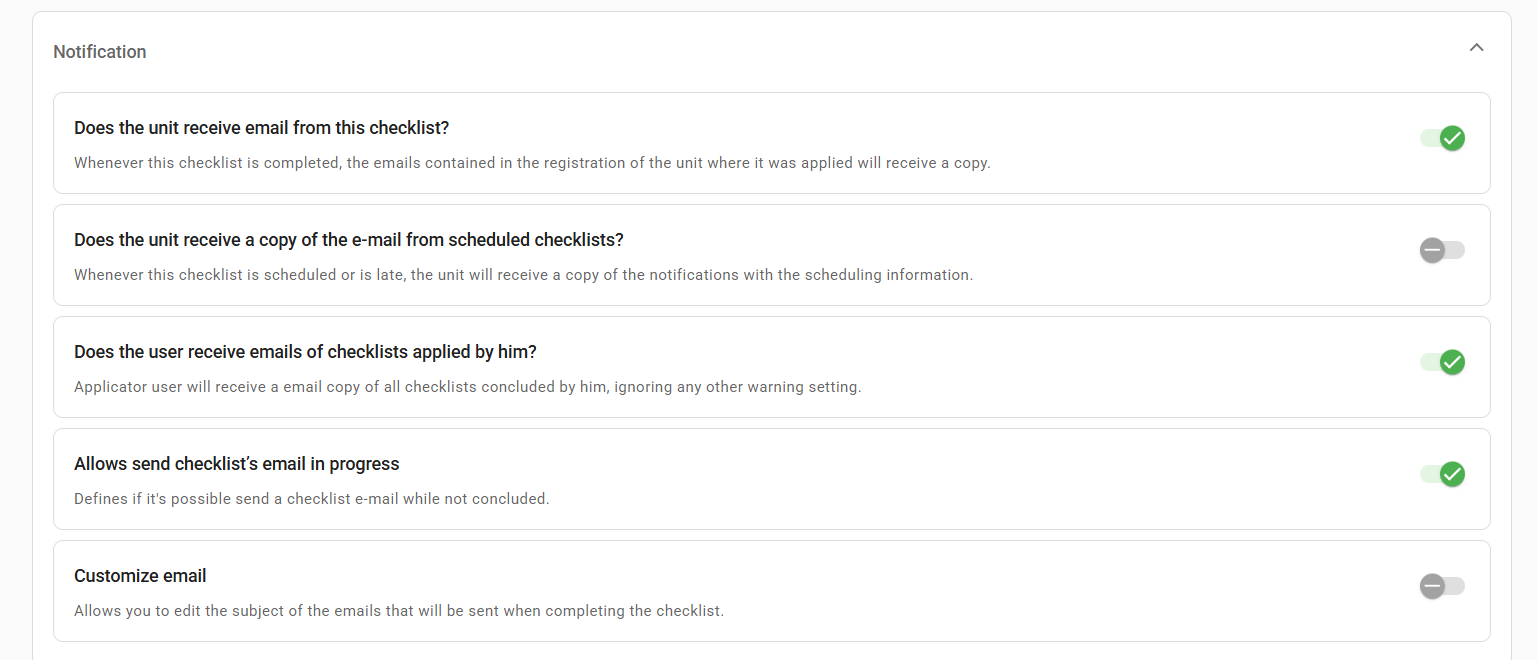
➕ Tip: Still on the Registration Data tab, you can configure notifications, enabling the checkboxes and allowing your units and users linked to this checklist to be notified, by email, when the application generates a notification.

You can also configure the subject line of emails that will be sent when you complete the checklist.
Setting up a checklist from scratch: Structure tab
The next tab is Structure, where you will add questions and add-ons to your checklist. In general, this is the part that will be evaluated by the user applying the checklist.
See the step-by-step guide on how to fill out this tab:
Step 1: To start creating your checklist, click Add Area.
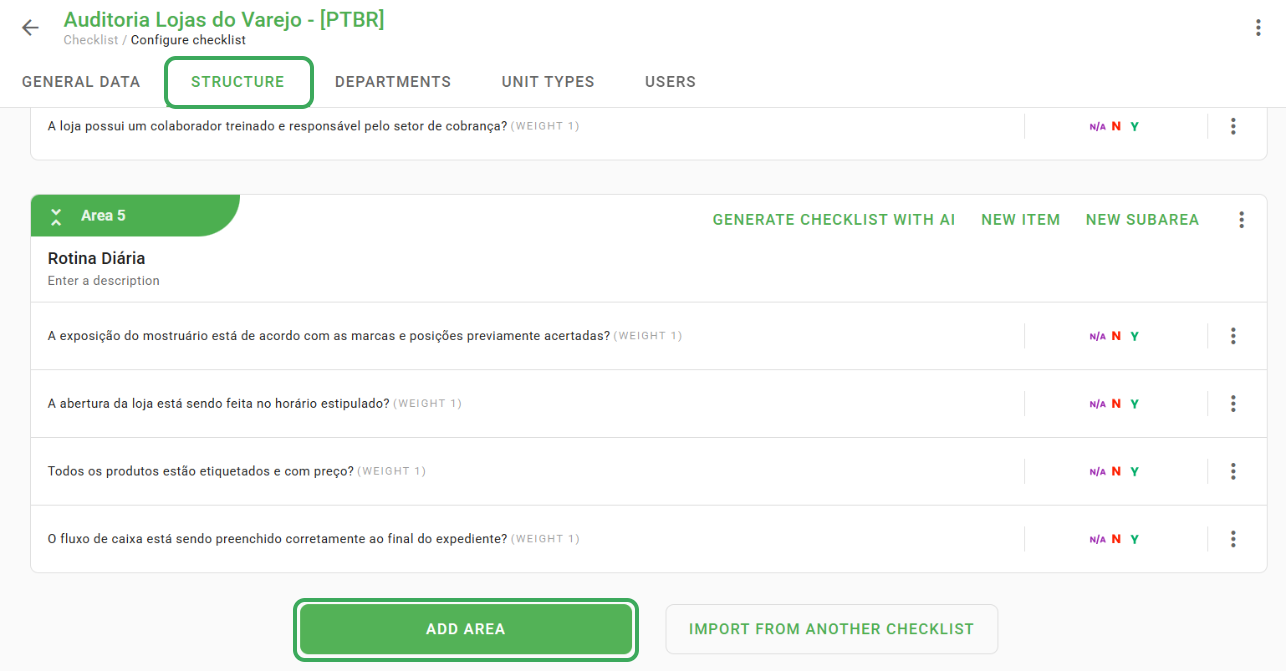
Then, choose a name for it, a description (optional) and click Save.

Step 2: With the area created, it's time to add the items that will be evaluated, by clicking on New item.
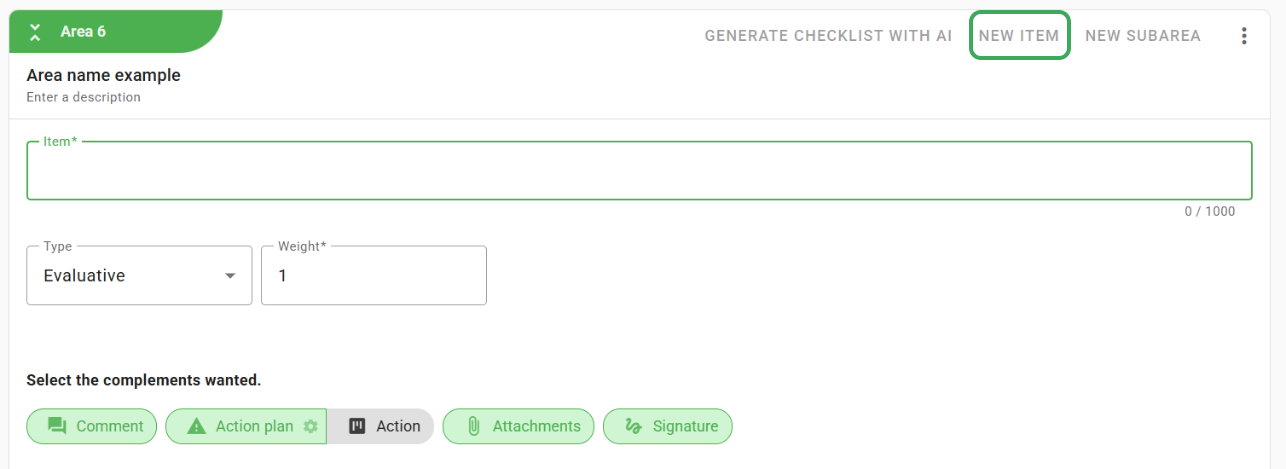
When adding an item, you will have some fields to configure. These fields will appear to the applicator when they are applying the checklist. Here is what each field means:
- Item: This is where you will add exactly what the applicator should evaluate. Examples: "Is the floor clean?" or "Is the instrument panel working properly?", and so on.

- Type: this field concerns the way in which the item will be evaluated, and you can choose one of the 7 existing options.
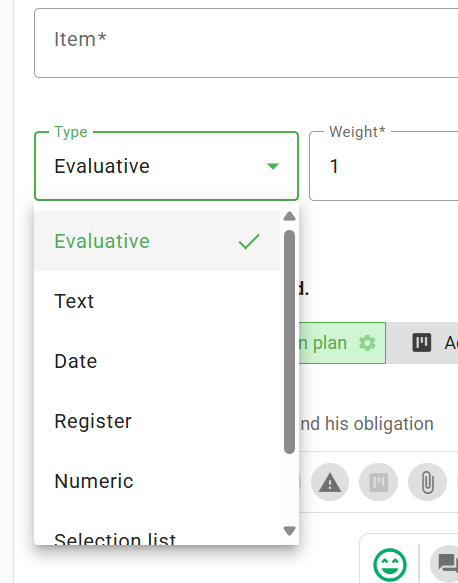
See what each type means: - Evaluative Type: this is the most common type, with three response options available: Yes or No, evaluative faces or an additional response scale, with the possibilities of N/A (not applicable) and Medal (exceeded).
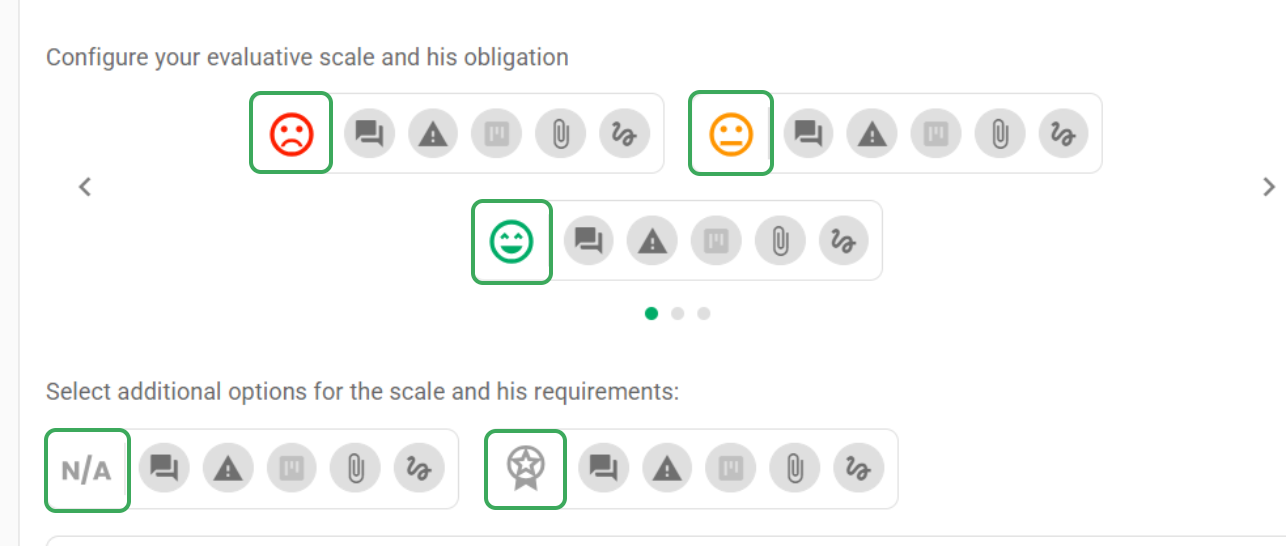
In the evaluation type, you can also choose the weight that this item will have in the final evaluation of the checklist: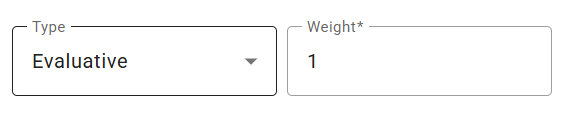
Text Type: This type allows the item to be answered in a short text or long text field.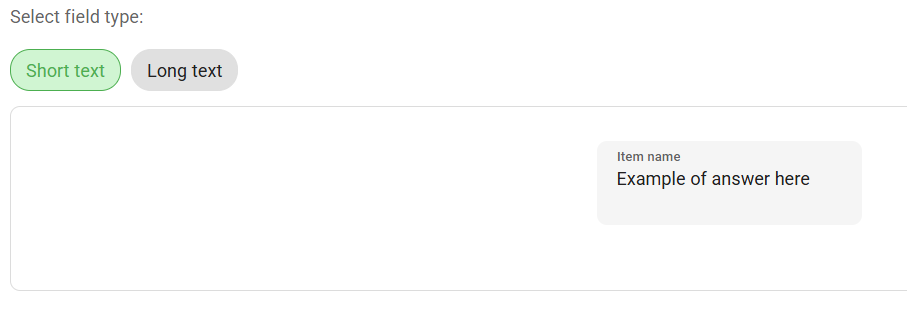
Date Type: the date type allows a value to be selected, respecting the chosen display standard.
Register Type: the response type configured as registration offers several filling options, such as email, state, vehicle license plate, among others.
Numeric Type: The numeric type allows you to define the format in which the value will be answered, such as quantity, decimal value, monetary value and percentage.
Selection list type: The selection list type allows you to create a list of options that can be selected at the time of the assessment. It is possible to define whether the applicator can select only one (single selection) or several options (multiple selection).
In the Evaluation List type, you can also choose the weight this item will have in the final evaluation of the checklist.
Special Type: the special type includes the option to respond with "no option", in cases where you want to use only the mandatory complements.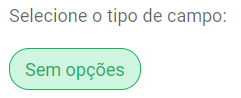
- Desired add-ons: regardless of the type of item chosen, there is the possibility of increasing the responses on your checklist using the desired add-ons.

Therefore, if you select these add-ons, the applicator must - mandatorily - fill them in at the time of application. They are:
Comment: you can configure, for example, that whenever an item is evaluated with a certain face, a comment is made about it.
Action plan: if activated, whenever an item receives a certain rating, it is mandatory to open an action plan to resolve and/or improve it.
Action: if activated, the process will continue via the action manager.
Attachments: it is possible to configure that whenever an item is evaluated in a certain way, an attachment is included.
After filling in the information about the item in question, choose whether it is mandatory and click Save. You can add as many items as you want within an area, repeating the same process described abov.
Setting up a checklist from scratch: Users tab
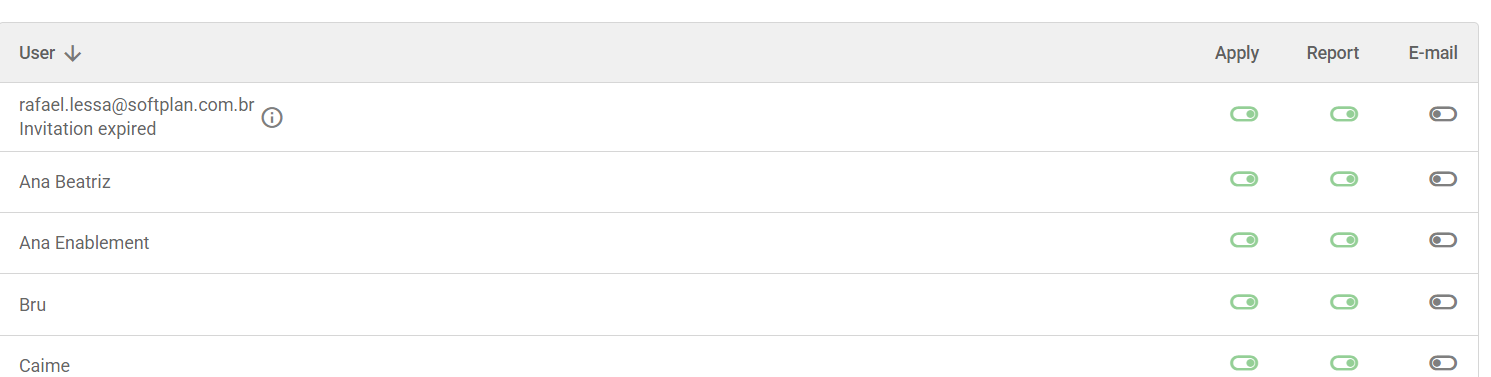
The last tab is Users, where you will link this checklist according to the role each user will play in the assessments. As with the other tabs, simply enable the link in the corresponding boxes and save.
✅ Haven't registered your users yet? Learn how: ➡️Here⬅️Is it possible to import checklists?
Yes!
In order to optimize the creation of checklists, it is possible to import items either via spreadsheet or from existing checklists. Below we will teach you both ways:
- Import via spreadsheet: when creating a new application, in the Structure tab, you can import a checklist via spreadsheet directly into the Checklist Fácil system. To use this option, click on the three dots icon in and select "Import via spreadsheet" or click on the "Import items via spreadsheet" button.
You will be redirected to a new page where you can download a blank spreadsheet template and fill it out as you wish. We recommend using Microsoft Excel or Google Sheets to edit, and do not rename the spreadsheet to avoid errors.
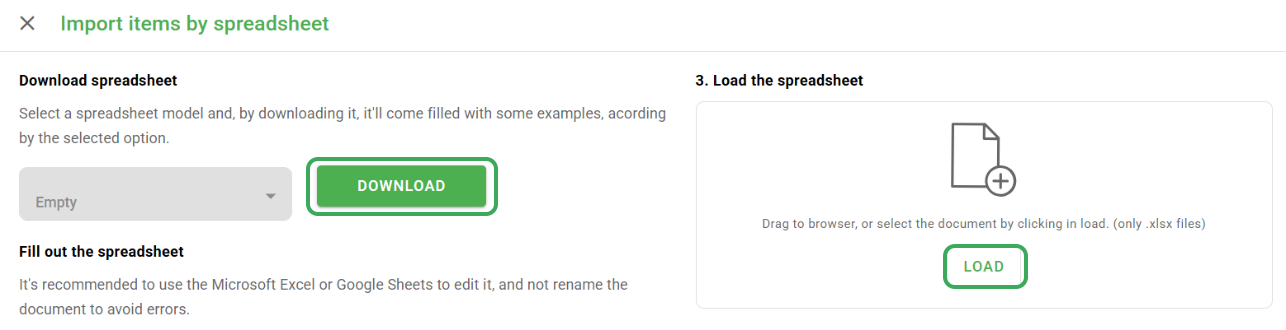
Once the spreadsheet is filled out, click "Upload" to select the file or drag it to the browser. After these steps, select the "Start import" option so that the system can load the spreadsheet. When "Done" appears, click "Go to structure".
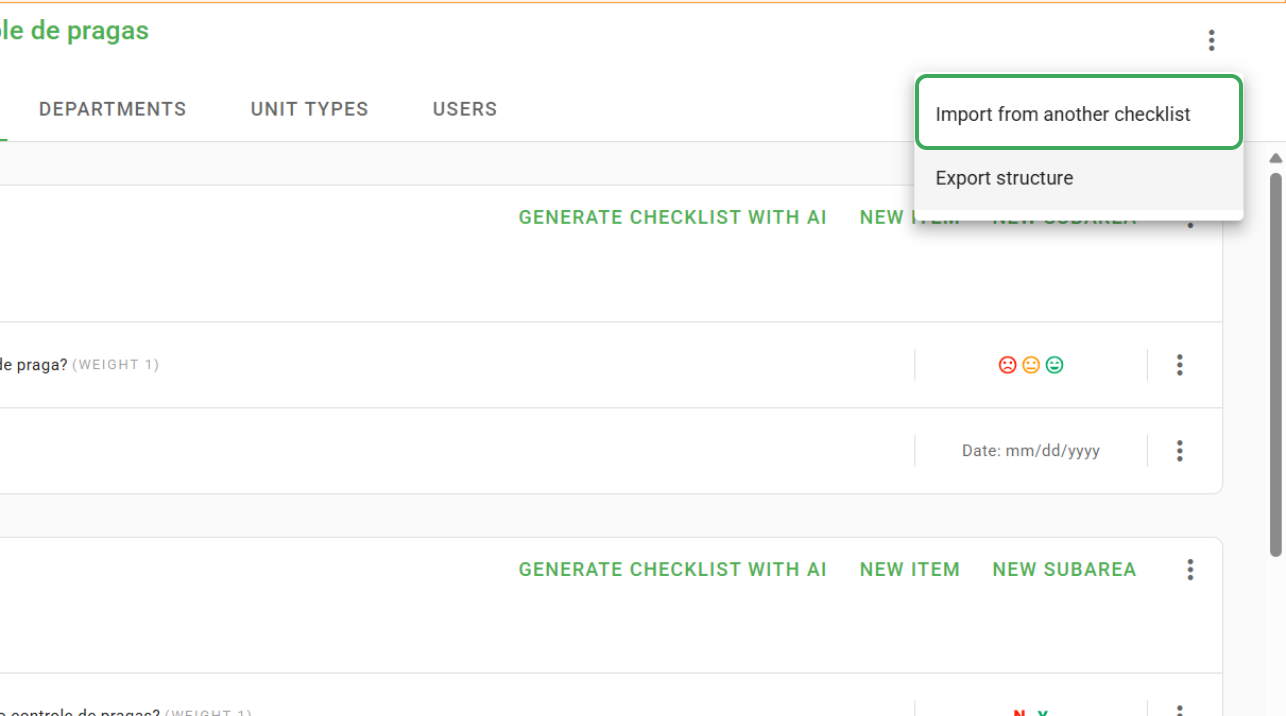
- Import from another checklists: Now, if you want to import items directly from another existing checklist, simply select the "Import from another checklist" option, either using the button at the end of the page or the icon highlighted below:
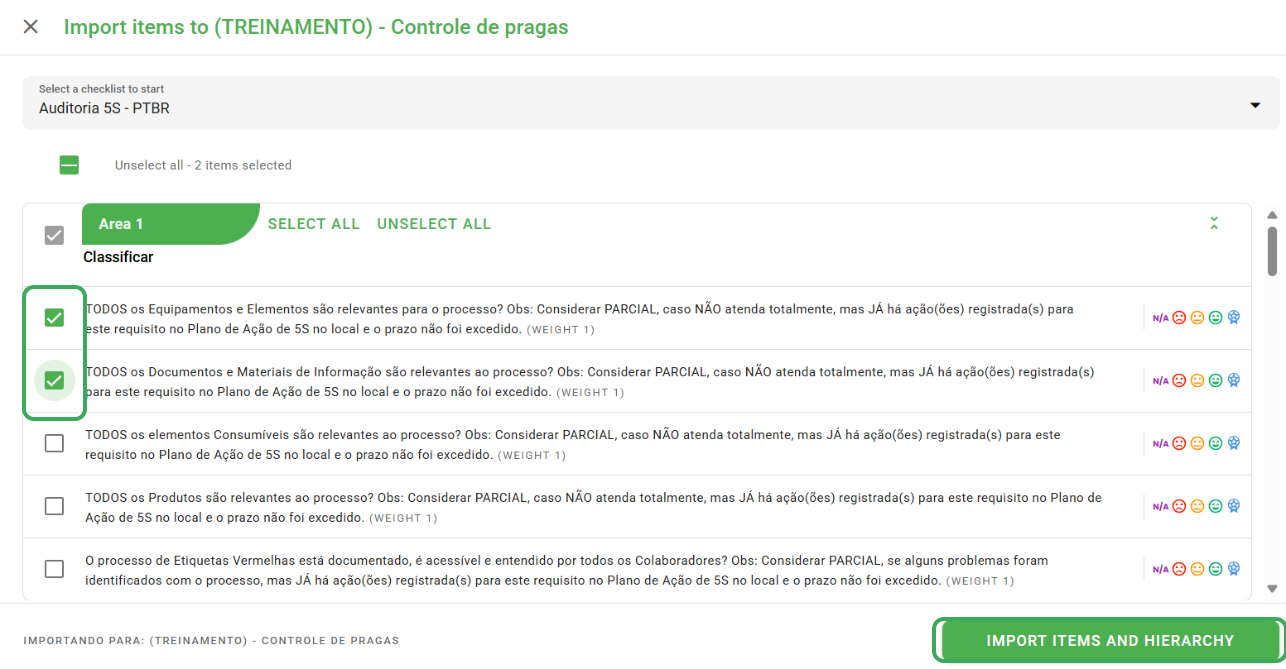
Select the checklist, and then select the items you want to import into your new checklist. It is important to note that this import will occur while maintaining the hierarchy of the items. Finally, click the "Import items and hierarchy" button.
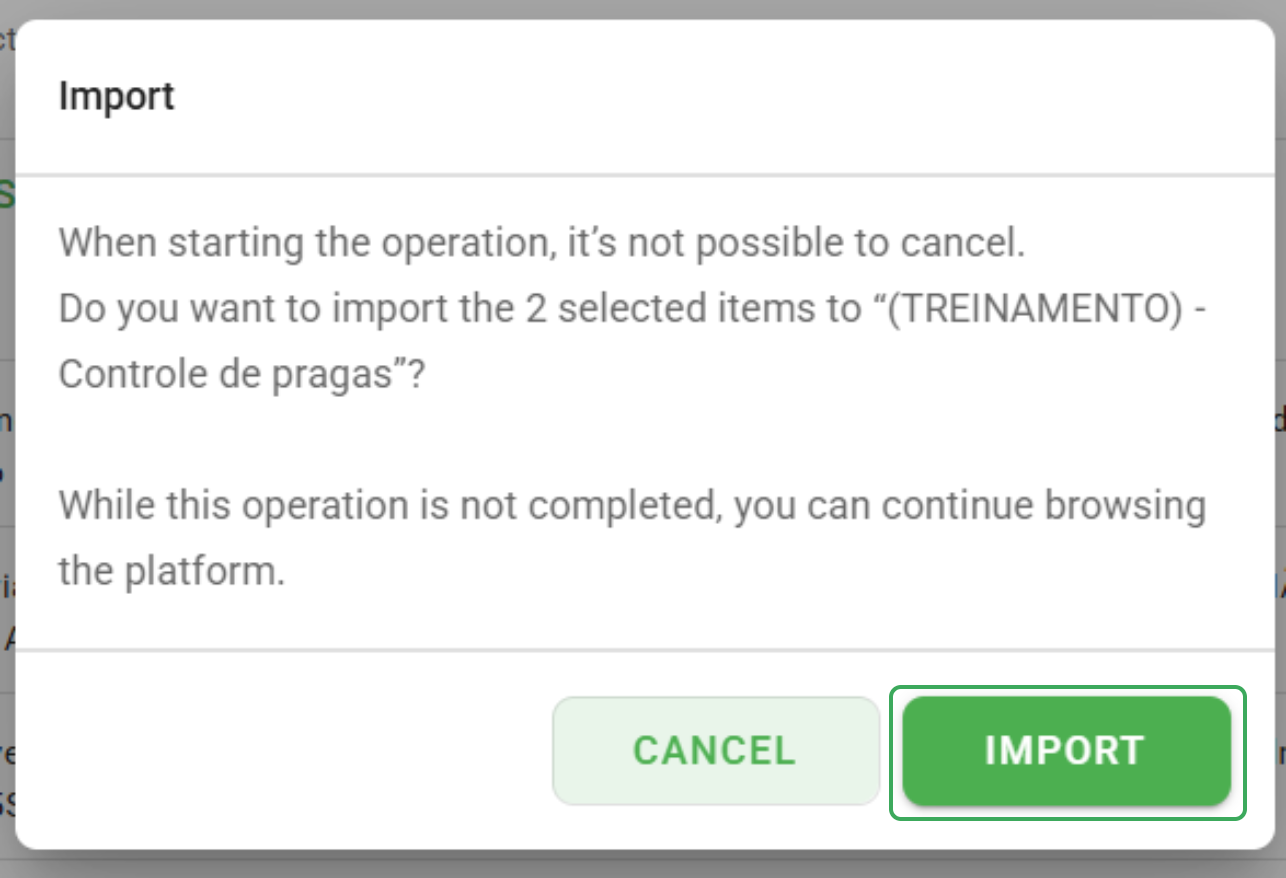
You will be notified that once the transaction has started, it will not be possible to cancel it, but until it is completed you will be able to continue browsing the platform. To continue, click on "Import".
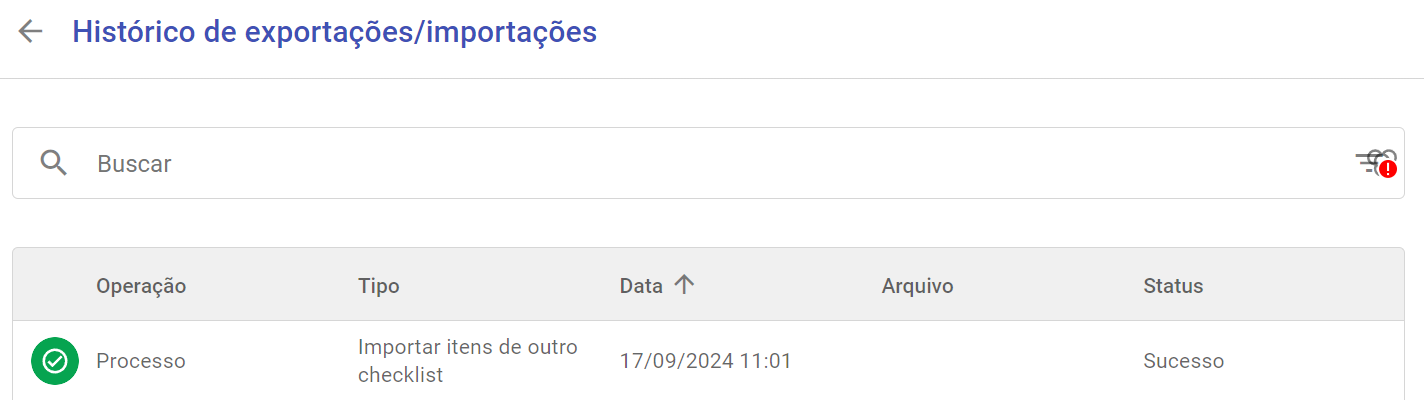
Once the process is complete, you will be redirected to the export/import history page to track the progress of your import.
Is it possible to edit any information in a checklist?
Yes!
If you want to add or change any information regarding a checklist, just go to the add checklists screen, hover the mouse cursor over the one you want to change and click Edit on the icon highlighted below:
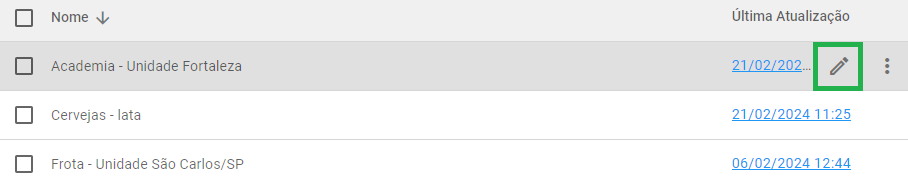
The editing screen allows you to change the fields that were defined at the time of registration. You can also activate or deactivate the link between users, departments and unit types, as well as edit, add or remove areas or items from the structure.
Finally, don't forget to click Save after making the desired changes.
Is it possible to delete a checklist?
Yes, but only after deactivating it. Next to the edit option, you can deactivate a checklist by clicking on the three dots and then clicking Deactivate.
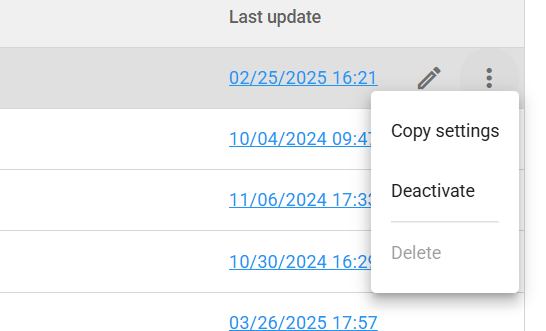
After deactivating it, repeat the same procedure to delete the checklist. The system will ask you to enter a code to delete it. Enter it and click delete.
___________________________________________
➡️ Was this article useful? Leave your review!
❓Do you still have questions? Contact us via chat or ticket!
❓Tem dúvidas? Entre em contato com nosso time de suporte.